How to play Hex Sense - a hexagonal minesweeper adventure
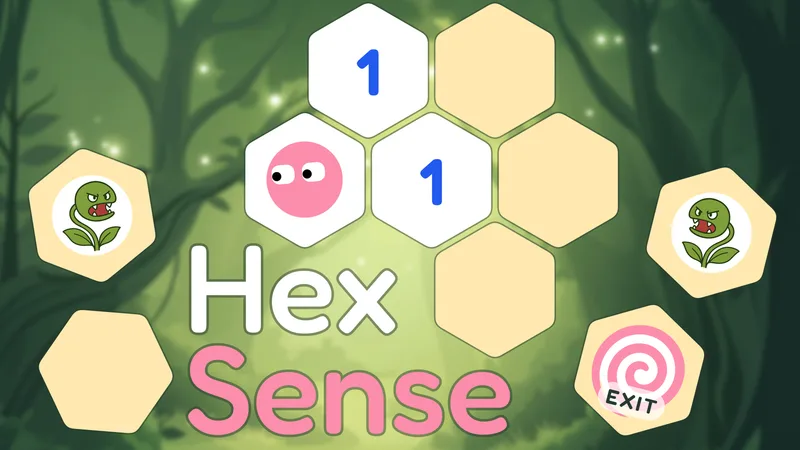
The best way I can describe Hex Sense in a few words is: a hexagonal minesweeper-inspired adventure puzzle. The number clues, the hidden hazards, the flags - all of that is here, but two things make it feel very different from the classic minesweeper. The board is made of hexagons instead of squares, and you are not just clearing a field - you are guiding a cute character called Mochi through it and helping him find his friends. On this journey we will take through different landscapes and challenges, introducing new game mechanics on the way. Like our other games on YesPuzzles, you can play Hex Sense online for free, right in the browser with no download.
In this guide I will explain the rules, the controls and give advice to help you get through the levels without stepping on anything dangerous.
The goal: get Mochi to the Exit
Every level is a small map of hex tiles. Some are open from the start, most are hidden. Somewhere on that map is the Exit tile that you can see from far away, and your job is to walk Mochi there without stepping on a hidden hazard.
You move by tapping or clicking a tile. Mochi can only step on hidden tiles that are connected to the areas you already opened, so the map unfolds step by step as you move. If you open a dangerous tile, the run ends - though the game offers you a chance to revive, so one mistake is not always final.
Reading the numbers
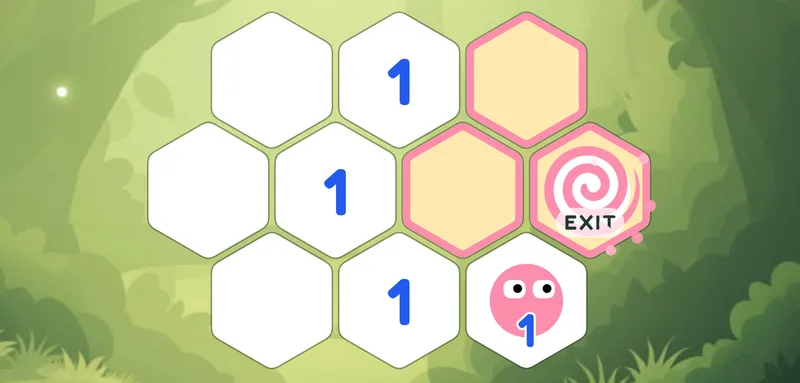
This part works exactly like in Minesweeper. Some opened tiles show a number, and that number tells you how many hazardous tiles are directly touching it. The geometry is the only difference: a square in classic Minesweeper has up to eight neighbors, a hex tile has up to six. Fewer neighbors means every number narrows things down faster, which I think makes this hexagon logic puzzle cleaner to reason about.
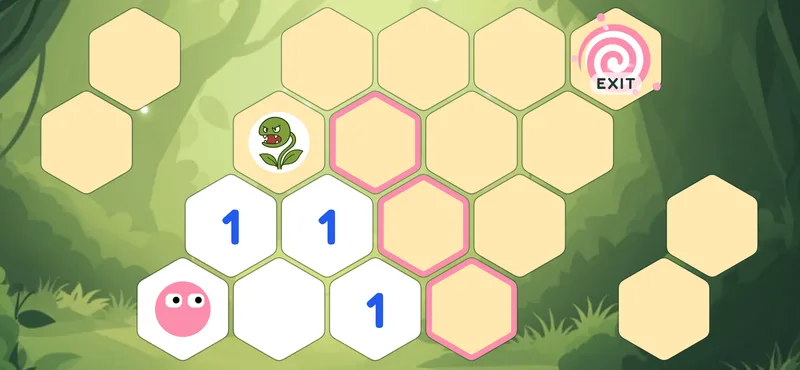
So when you see a 1, exactly one of the neighboring tiles hides a hazard. When a number is already “satisfied” by the tiles you flagged, all its other neighbors are safe. Cross-check two or three numbers against each other and you can very often say with full certainty which tile is dangerous and which one is not. Several new players asked me about the open tiles without a number - you can treat them as having a number 0, meaning there is absolutely no danger in the neighboring tiles. This is why such tiles automatically open all of their neighbor tiles in a wave chain reaction.
And here is the promise I am most proud of: Hex Sense is a game with no guessing. In every state of the puzzle there is always at least one tile you can figure out with pure logic. If you feel stuck, it is not because the game wants you to flip a coin - there is a clue you did not notice yet. The 50/50 guesses were always the most frustrating part of the classic minesweeper game for me, so I insisted that the team removed them. I should add that in Daily Level this is not the case, because these levels are unique every day and we were unable to enforce the “100% logically solvable” rule on them yet. But we are working on it!
The Link symbol
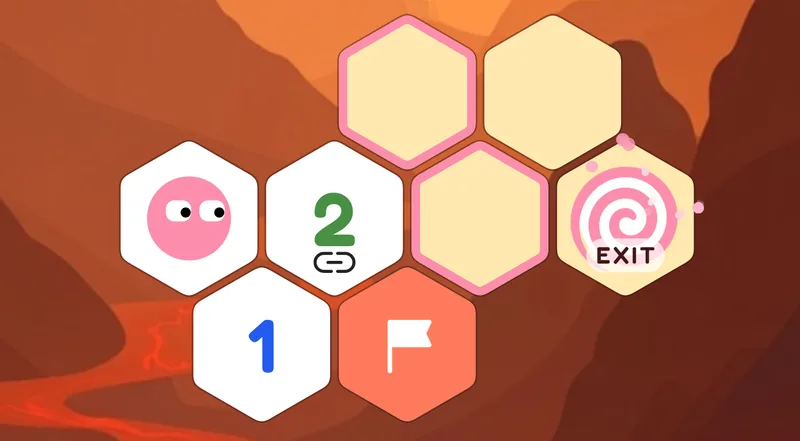
I think this is the coolest addition to the classic minesweeper rules in Hex Sense. The link symbol can be displayed under the numbers in the hex grid cells. It signals to the player that all of the hazardous neighbors are next to each other. For example, if you stand on a tile with a 2 and a link symbol, and you already know where one of the hazards is, then you can narrow down the options for the second hazard. You can also use the missing link icon as a signal that the hazards are not next to each other and eliminate potential hazard locations! It dramatically increases the logical deduction possibilities. We did not come up with this idea, we borrowed it from another hex grid puzzle game called Hexcells. When we tried adding the Link in Hex Sense it just made the game so much more fun that it had to stay.
Flags and the Eye
When you work out that a tile is dangerous, right-click it (or long-tap on the phone) to place a flag. Flags are notes for yourself so you don’t step there by accident, and they also help you read the numbers around them. Use them a lot - we made the game and we still flag everything.
There is also the Eye button. It lets you safely check one hidden tile before stepping on it. As I mentioned before, you don’t need this to complete campaign levels, they are designed to be winnable with pure logical deduction. But for new players that are just learning the ropes, this can be very helpful.

Keys, stars and chapters
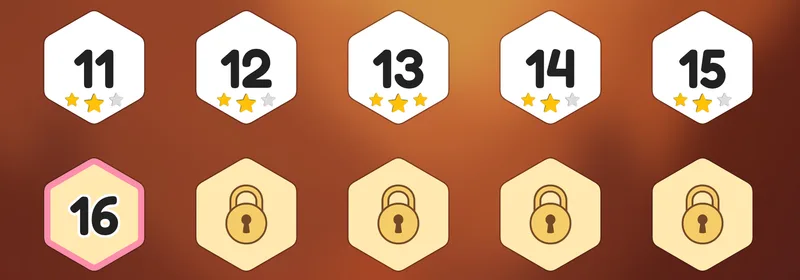
Not every level is a straight walk to the Exit. In some levels the Exit is locked and you first need to find a key somewhere on the map. And if you want the full reward, open all the safe tiles on the level - that earns you 3 stars instead of just a pass.
The game is split into chapters, and new chapters bring new hazards and new mechanics, so the rules above are the base but not the whole story. We also plan to release more chapters with more features later on.
A few beginner tips
Start reading from the numbers with the fewest hidden neighbors - they give the most certain information. Flag first, move second: it is tempting to just walk, but one careless step costs more than ten careful ones. And don’t rush. There is no timer, the puzzle will wait for you, and the whole point is that calm, satisfying feeling when the logic clicks and the safe path opens up in front of you.
How do you enjoy our game? What would you like to see in Mochi’s continued adventures? Tell us in our Discord server, and if anything in the rules is still unclear, ask there too - I hang out there almost every day and always respond to our players.
Written by
Pavlo